Modified Xbox One X Gains Secondary M.2 Slot
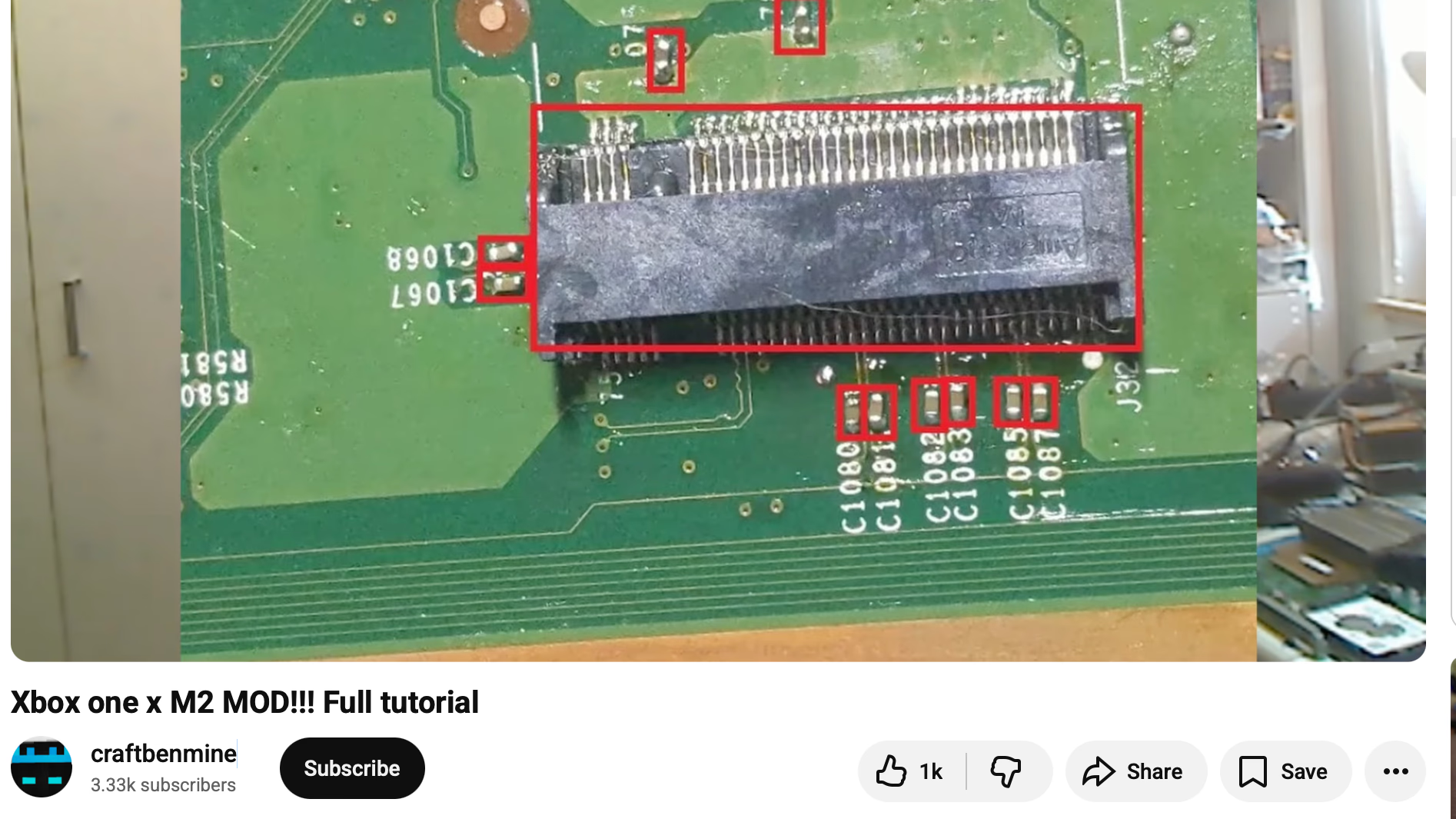
In a groundbreaking achievement for the console hardware modification community, an independent hardware enthusiast has successfully added a fully functional secondary M.2 NVMe SSD slot to a retail Xbox One X motherboard. By populating complex factory-left empty pads and reconfiguring the motherboard’s clock architecture, this modification bypasses factory limitations to unlock unprecedented storage upgrades.
The modification required extensive work on power delivery and signal management. To power the M.2 interface, which is unpowered and isolated from the factory, a dedicated power supply circuit and signal management system were built from scratch. This included adapting PCIe Reset signals with transistors and resistors, and establishing a 3.3V power line via a MOSFET load switch controlled by the Southbridge. For stability and diagnostics, decoupling capacitors and an LED for SSD activity were installed.
With the power delivery system live, a physical M.2 connector was meticulously soldered directly onto the motherboard's unpopulated pads. Eight 0.1µF series capacitors had to be populated on the APU's data lines to prevent the circuits from remaining open, which would have left the console unable to detect any storage medium.
The most delicate stage involved disabling Microsoft's default retail clock distribution to prevent signal interference. This required desoldering and removing twelve factory resistors/jumpers and adding two 10kΩ resistors to the severed APU lines to prevent dangerous signal noise.
Since the Southbridge clocks were disabled, a dedicated clock buffer chip (9DBV0541) was installed to manage the console's timing requirements. This chip, powered by a 1.8V rail, uses the original Ethernet clock as its reference and then splits it into four necessary differential clocks: one for Ethernet, one for the new M.2 slot, and two for the APU. To maintain compatibility with the factory firmware, unused clock outputs, the SMBus clock, and data lines were tied high to the 1.8V rail.
By matching the exact engineering specifications used in official Microsoft development kits, this mod bridges the gap between retail limitations and enterprise hardware capabilities. The successful boot and execution of data over the newly populated M.2 interface marks a historic milestone for console preservationists and extreme hardware hobbyists alike.