Bliss hack - Xbox One was never truly "unhackable"
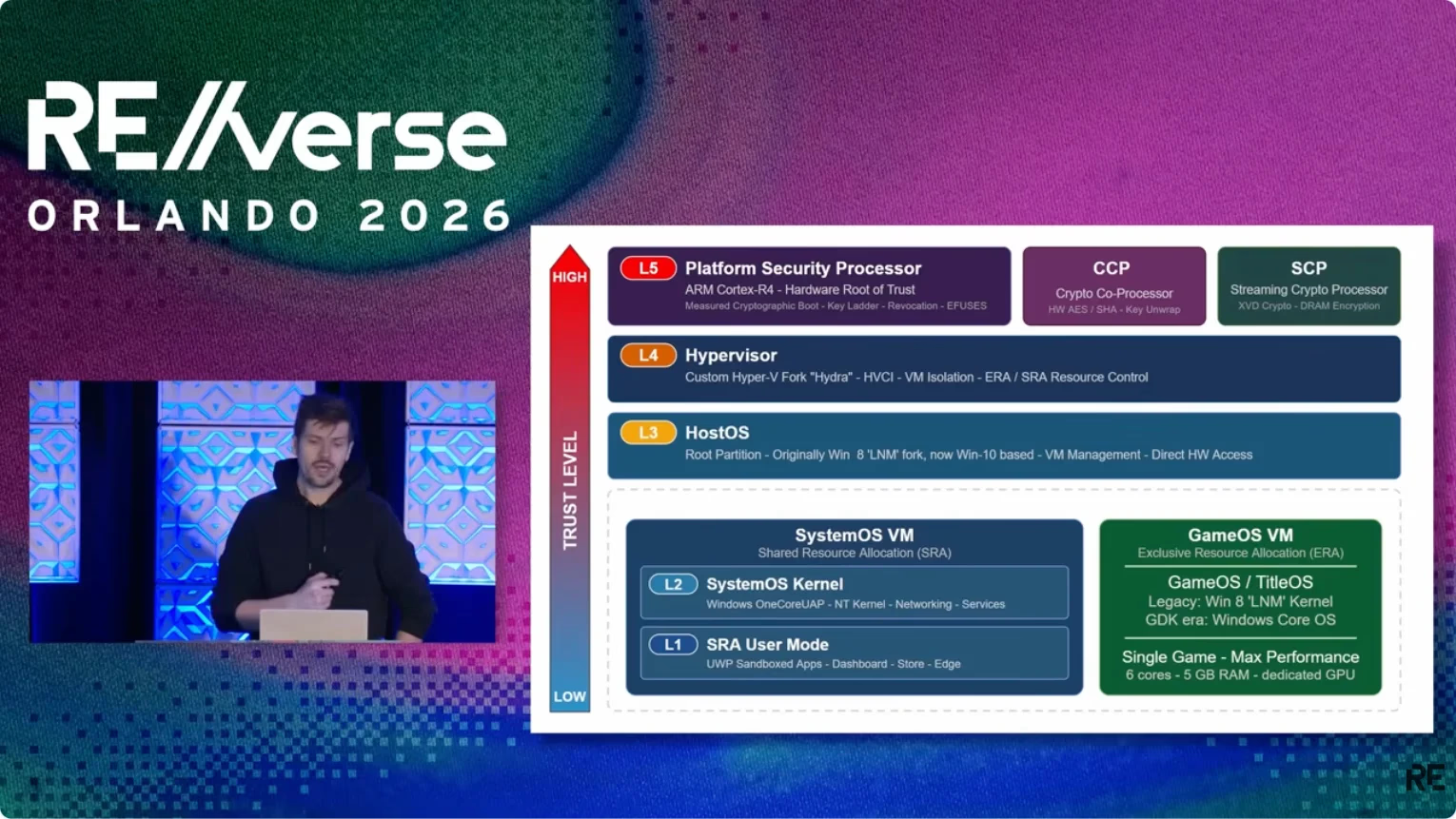
Despite the Xbox One's launch reputation for being completely secure, a deep dive into its security architecture reveals a vulnerability present from the beginning. The security surrounding the console, launched in 2013, has often been described with a single word: "unhackable".
The system relies on a security architecture where all obvious attack surfaces are protected by platform-specific mitigations and designed to be disposable. User mode, kernel, hypervisor, and system firmware are independently protected, signed, and bound to a morphing key system. This means an exploit on one version does not grant the ability to decrypt or run future updates and content.
The only critical code outside this safety net is the small, carefully constructed bootrom of the Platform Security Processor. This code is burned directly into the console's custom AMD SoC and serves as the anchor for the entire chain of trust. Microsoft engineered this bootrom as a fortress with minimal complexity, hardened cores, purpose-built hardware countermeasures, fault-tolerant patterns, randomized stalls, and layered redundancy to control the early boot stage.
According to security expert Markus Gaasedelen, who presented his findings in a talk titled "Hacking the Xbox One", a specific Xbox One console manufactured in 2013 is required. These early models feature a soc named Durango with its anti-glitch protection disabled. Later revisions of the console have this protection enabled, making them significantly more difficult, if not impossible, to bypass.